ISBA TP’s CSR approach is part of a broader policy. Meeting “corporate social and environmental responsibility (CSR) objectives” requires the involvement of all stakeholders and related environments. ISBA TP’s CSR policy and that of its campus are therefore part of the policy led by the CCI Métropolitaine Aix-Marseille-Provence (CCIAMP), and thus apply to all the training organizations it manages within its Skills Development Support Department (DADC) — ISBA TP, École Pratique and CCI Formation — and are put into practice on the Luminy Higher Education Campus. It is organized around five areas: sustainable campus, inclusion and equality, educating responsible minds, civic engagement.

CSR approach
Sustainable campus
A campus dedicated to innovation and success
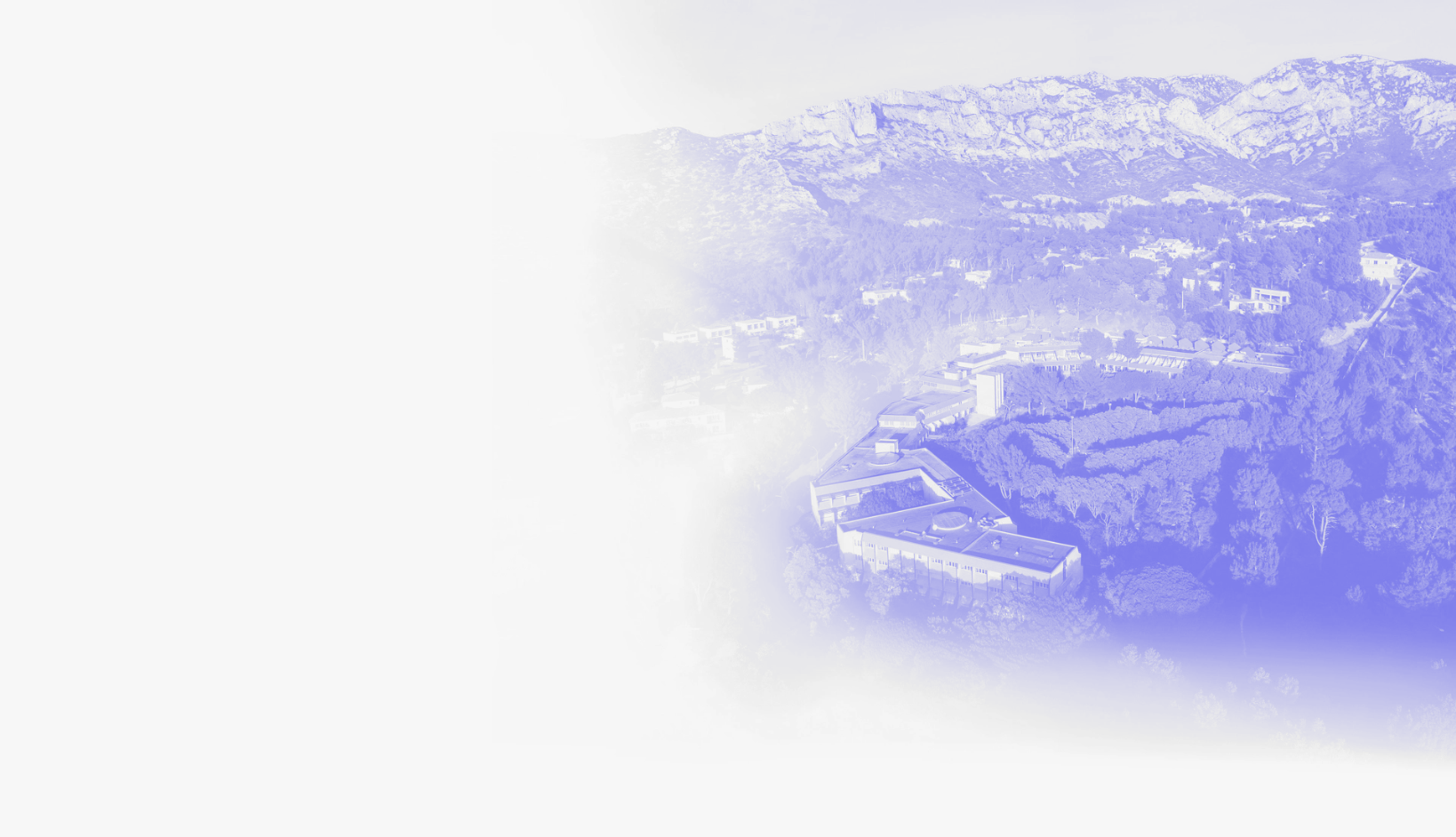
Since moving to the Luminy Higher Education Campus in 2022, ISBA TP has enjoyed an outstanding environment dedicated to education, research and innovation. Following a two-year retrofit, the campus has been fully modernized to offer students, faculty, researchers and industry partners a learning environment that meets the highest standards of comfort, energy performance and quality of life.
Located at the heart of the Marseille-Luminy technology park, on the doorstep of Calanques National Park, the campus combines academic excellence, close ties with companies and an exceptional natural setting. A true place of learning and experimentation, it brings together connected teaching spaces, technology platforms, laboratories, collaborative spaces and state-of-the-art equipment dedicated to careers in infrastructure, building and the digital transition.
A sustainable campus
Designed according to the principles of sustainable development, the Luminy Higher Education Campus has undergone an ambitious energy retrofit. This includes improved thermal insulation of the buildings, replacement of windows and exterior doors, installation of solar shading, modernization of the heating and air-conditioning systems with reversible heat pumps, installation of balanced ventilation with heat recovery, and the rollout of high-efficiency LED lighting.
This is complemented by a solar PV plant for on-site self-consumption, which produces renewable energy consumed directly on campus and helps reduce its carbon footprint.
Beyond its facilities, ISBA TP takes part in the “Perma Campus” initiative, which encourages the adoption of responsible everyday practices. Reducing single-use plastics, installing water fountains, sorting waste, raising awareness of eco-friendly habits and promoting sustainable mobility all reflect the school’s commitment to involving its entire community in the ecological transition.
This policy is fully in line with the commitments of ISBA TP and the CCI Aix-Marseille-Provence to corporate social and environmental responsibility.
Key figures
Campus committed to the ecological transition
Solar PV plant for on-site self-consumption
100% high-efficiency LED lighting
Perma Campus initiative for more responsible practices
Promoting sustainable mobility
In the heart of Calanques National Park
jobs
Impact on sustainable jobs
The school contributes to the emergence of sustainable skills and jobs through its partnerships and the programs it develops. Its partnership with STMicroelectronics, in place since June 2022 (the “RecyCard” initiative), gives a second life to unsold electronic boards destined for destruction — more than 200 boards recovered in the first year alone — to equip its digital-focused programs. ISBA TP also trains engineers in specialties directly linked to the transitions under way in the construction industry: smart eco-connected buildings, digitalization and operation of buildings, and earthquake and nuclear engineering. The CCIAMP’s policy also includes social-inclusion hiring criteria in its public procurement and encourages solidarity-based partnerships and short supply chains with local economic stakeholders.
engagement
Civic engagement
ISBA TP is fully aligned with the social responsibility approach led by the CCIAMP. As such, the school benefits from the Chamber’s initiatives in sustainable development, ethics and civic engagement. In particular, the CCIAMP is working toward ISO 20121 certification, which aims to integrate the principles of sustainable development into the organization of its events. This approach promotes the responsible management of events by taking into account their environmental, social and economic impacts, while involving all stakeholders in a process of continuous improvement.
This policy is also reflected in concrete actions supporting the circular economy, transparent purchasing, short supply chains, waste recovery and environmental protection. Flagship initiatives include the development of partnerships with circular economy players, the “Ports Propres” (Clean Ports) certification of the Anse de la Réserve port, and regular surveys of employees, suppliers and users to improve the institution’s practices. On the research side, ISBA TP works on port-related issues and the associated sediments.
Social responsibility is also expressed through students’ involvement in concrete actions that serve the environment, solidarity and the public interest. The school encourages everyone to become an active player in the ecological and social transitions by taking part in collective projects carried out in partnership with local stakeholders.
Every year, alongside associations such as Clean My Calanques, ISBA TP organizes one or two awareness and action days dedicated to preserving the Mediterranean coastline and Calanques National Park. This initiative enables students to make a concrete contribution to protecting their environment while developing their sense of collective responsibility.
The school also takes part in numerous events that promote civic engagement and openness to major societal issues, such as Sortie d’Amphi, the Delta Festival, the national initiatives led by Elles bougent to promote gender diversity in engineering careers, and the Téléthon du BTP, reflecting the ISBA TP community’s values of solidarity and commitment.
ISBA TP also promotes gender diversity in science and technical programs. In partnership with the CDEFI and the association Elles bougent, the school takes part in numerous awareness-raising initiatives to promote engineering careers among young women: International Women’s Day, career guidance speed-networking sessions, equality awards, talks by women mentors, Industry Week (Semaine de l’Industrie) and events dedicated to the building, digital and infrastructure sectors.
Beyond these events, students regularly take part in conferences, awareness days, solidarity initiatives and collaborative projects that help develop their initiative, sense of responsibility and civic engagement — essential skills for the engineering profession.
equal opportunity
Inclusion and equality
ISBA TP places inclusion, equal opportunity and social responsibility at the heart of its educational mission. Convinced that diversity enriches the education of future engineers and experts, the school is committed to providing a respectful, accessible learning environment that supports everyone’s success.
Every year, our international programs welcome students from all over the world with distinctive backgrounds: recent graduates, professionals, career changers, and more. The school also runs several initiatives promoting equal opportunities. The program PC4All program gives every student a laptop provided by the school, ensuring equal access to the digital tools essential to their studies.
The HandiMOVE initiative provides personalized support for students with disabilities through tailored solutions for getting around campus, note-taking, exam accommodations and disability compensation measures. At ISBA TP and on the Luminy campus, this commitment relies on a dedicated organization bringing together a disability (RQTH) and gender equality coordinator, a campus CSR coordinator and a safety coordinator, in order to support students, foster their well-being and ensure a safe, inclusive and respectful learning environment.
teaching
Education in step with today’s transitions
At ISBA TP, social responsibility issues are progressively integrated into teaching in order to train engineers and experts capable of meeting the environmental, digital and societal challenges of tomorrow’s infrastructure.
To meet these challenges, the school is currently rolling out an Artificial Intelligence Use Charter, designed to guide students towards an ethical, responsible and reasoned use of AI tools. This approach aims to make artificial intelligence a genuine lever for learning, creativity and decision-making, while developing critical thinking, transparency of use and respect for academic integrity.
Each year, the curricula are enriched with courses and lectures on the safety of structures, buildings and construction sites, raising students’ awareness of risk prevention, the protection of people and compliance with regulatory requirements.
Given the shrinking supply of land and environmental challenges, predictive maintenance is addressed through use cases. Drawing on digital technologies, digital twins, connected devices (IoT), artificial intelligence and data analysis, students learn to monitor the condition of structures, detect early warning signs of deterioration and produce decision-support indicators. This approach makes it possible to anticipate maintenance, renovation or rehabilitation work, optimize infrastructure asset management and extend its service life while controlling costs, risks and environmental impacts.
The programs also include expanded teaching on the life cycle assessment (LCA) of structures, construction sites and materials, as well as the study of their technical and environmental characteristics and their durability. These approaches enable future graduates to integrate the principles of the circular economy, resource sufficiency and decarbonization into their professional practice.
This focus on environmental issues enables the engineers trained at the school to move from a corrective maintenance approach to a predictive one, based on data use, risk management, structural resilience and informed decision-making.
FAQ
Frequently asked questions
ISBA TP’s CSR approach, led by the Aix-Marseille-Provence Metropolitan Chamber of Commerce and Industry on the Luminy Higher Education Campus, is organized around five pillars: a sustainable campus, impact on sustainable jobs, educating responsible minds, inclusion and equality, and civic engagement.
Yes. The campus has undergone an energy retrofit: thermal insulation, double-glazed windows, adjustable sun louvers, reversible heat pumps, balanced ventilation with heat recovery and LED lighting, complemented by a solar PV installation of about 13 kWp for on-site self-consumption.
ISBA TP draws on campus-wide initiatives for equality and inclusion: RQTH (recognized disabled worker status) and gender equality coordinators, laptop loans (PC4All), individualized disability support (HandiMOVE) and initiatives promoting gender diversity in technical careers (Mix2FORM, partnership with Elles bougent).